Dream Interpretation: How to Decode the Symbolic Language of Your Subconscious
Table of Contents
You wake up, but the feeling lingers.

The coffee is brewing, the morning light is hitting the kitchen counter, and the logic of the day is starting to boot up. But there is a residue left over from the night—a fragmented image of a house you’ve never visited, a conversation with a person long gone, or a sensation of flying that felt more real than gravity.
Most of us have two reactions to this. We either shake it off as “brain static,” or we rush to a search bar to ask what it means.
But treating dream interpretation like a simple transaction—typing in a symbol and getting a one-sentence answer—misses the point. Dreams are not riddles with a single correct answer. They are a different language entirely. They are the dialect of your intuitive self, trying to tell you something your logical mind is too busy to hear.
The Neuroscience of the “Night Shift”
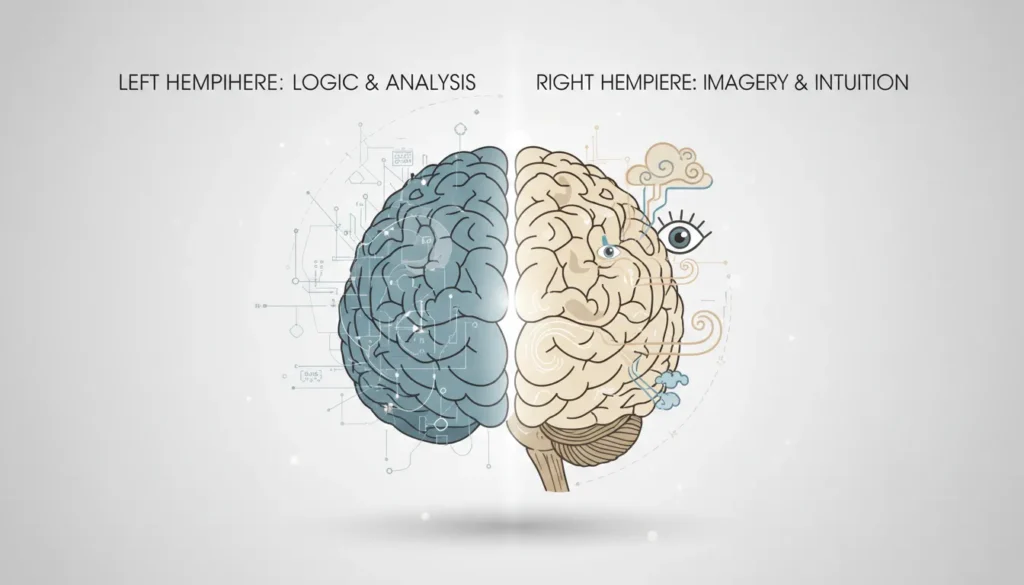
To understand dream interpretation, we have to stop looking at dreams as “weird” and start understanding why they are weird.
In our waking life, we rely heavily on the Left Hemisphere of the brain. As noted by psychiatrist and researcher Dr. Iain McGilchrist, the Left Hemisphere is responsible for narrow focus, explicit language, and categorizing the world into manageable parts. It likes things to make sense.
But when we dream, the brain’s hierarchy shifts. The logic centers dampen, and the Right Hemisphere—the part of the brain responsible for broad awareness, the “whole” picture, and metaphor—takes the lead.
This is why you can’t simply “read” a dream like a textbook. Your Right Brain doesn’t speak in sentences; it speaks in images and feelings. When you dream of a storm, your brain isn’t showing you weather; it is showing you the feeling of turbulence that you haven’t processed yet.
The Triangulation Method: How to Interpret
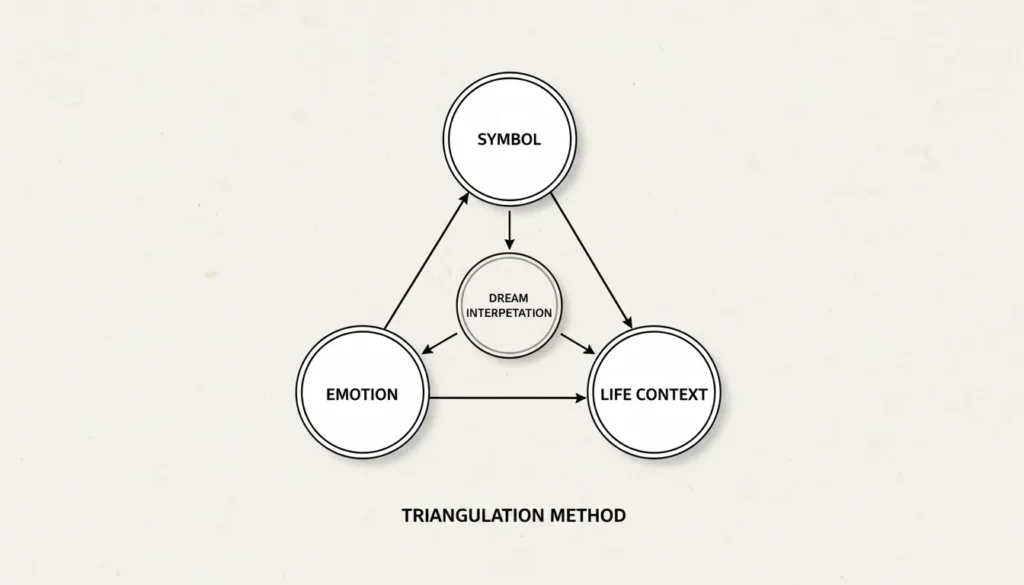
Effective dream interpretation isn’t about memorizing a dictionary. It is about learning to translate this Right-Brain imagery into Left-Brain understanding.
I use a method called Triangulation. You need three points of data to find the truth of a dream.
1. The Core Symbol (The “What”)
This is the object or scenario. A spider, an ex-partner, a tidal wave.
- The Mistake: Taking it literally. Dreaming of death rarely means someone is dying; it usually means a phase of life is ending.
- The Fix: View the symbol as an actor on a stage. What role is it playing?
2. The Somatic Resonance (The “Feel”)
This is the most critical and ignored step. Two people can dream of a fire. One feels warm and comforted; the other feels terrified and trapped.
- The Science: The Right Hemisphere is deeply connected to the body and embodied experience.
- The Question: When you woke up, where did you feel the dream in your body? Was there a tightness in your chest (grief/anxiety) or a lightness in your limbs (freedom)?
3. The Current Context (The “Now”)
Your dreams are rarely predicting the future; they are processing the present.
- The Connection: If you dream of being chased, look at your waking life. What are you running from? A deadline? A difficult conversation? An emotion you don’t want to feel?
The “When” Matters: The Role of Timing
One aspect of dream interpretation that Western psychology often overlooks is time.
According to Traditional Chinese Medicine (TCM), the body circulates energy (Qi) through specific organ systems at specific times. The time you wake up from a dream can give you a clue as to which energetic system is processing emotion.
- 1:00 AM – 3:00 AM (The Liver Hour): This is the time of the “General”. Dreams during this window often involve conflict, frustration, or feeling “stuck.” If you jolt awake here, you may be processing unresolved anger or resentment.
- 3:00 AM – 5:00 AM (The Lung Hour): This is the time of the “Corporeal Soul” (Po). Dreams here are often more ethereal, sad, or poignant. If you find yourself specifically waking up at 3AM, this is often a ‘system interrupt’ signaling a need to connect with your intuition and process grief or detachment.
Decoding Common Archetypes
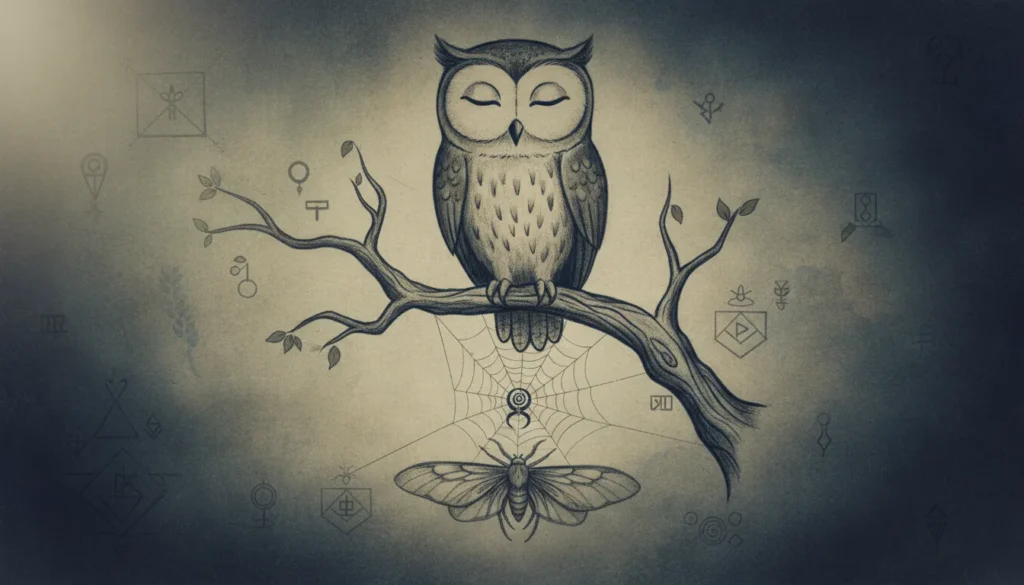
While your personal context is king, there are Archetypes—universal symbols that appear across cultures—that tend to carry consistent energy.
The Animal Messengers
Animals in dreams often represent our instinctual nature that civilized life suppresses.
- The Spider: Often feared, the spider is actually the “Master Weaver”. Finding a spider spiritual meaning in your dream often relates to how you are constructing your life—your destiny, your patience, and your creative output.
- The Owl: If an owl appears, it is rarely a casual visit. These are symbols of wisdom, deception, and seeing what others cannot. The owl spiritual meaning asks you to look at the “Shadow” side of a situation that you might be ignoring.
- The Moth: Unlike the butterfly which seeks the sun, the moth navigates the dark. The moth spiritual meaning often points toward blind faith, compulsion, or navigating through a “dark night of the soul” where you must trust your inner guidance without seeing the full path.
The Elementals
- Water: Almost always relates to emotion. The state of the water (turbulent, stagnant, clear) mirrors your emotional state.
- Houses: Usually represent the Self. Discovering a new room in a house suggests you are discovering a new aspect of your personality or potential.
Practical Steps to Better Interpretation
You don’t need to be a psychic to get better at this. You just need to build a bridge between your left and right brain.
- Don’t Move: When you first wake up, stay completely still. Moving your body engages the motor cortex and “overwrites” the delicate memory of the dream.
- Sketch, Don’t Just Write: Because dreams are visual (Right Brain), sometimes drawing the symbol works better than describing it with words.
- Identify the Residue: Before you analyze the plot, name the feeling. “I felt small.” “I felt hunted.” “I felt infinite.”
- Check the Body: If the dream came with physical symptoms—like ringing ears, itching palms, or chills—your body is trying to amplify the message. Learning to interpret these body signs and meanings can validate the emotional message of the dream.
Summary
Your dreams are not random noise. They are your intuition working the night shift, processing the emotions, conflicts, and hopes that your conscious mind is too busy to handle during the day. By paying attention to the symbols, the timing, and the feeling, you turn sleep into a source of profound guidance.