The Hidden Language of Body Signs: Exploring Spiritual Meanings and Soulful Awareness
Table of Contents
You know that feeling. You are washing dishes or driving down a quiet stretch of highway, and suddenly, your ear rings with a low, steady hum. Or perhaps, right as you make a difficult decision, a shiver runs up your spine that has nothing to do with the temperature.
For a moment, you pause. The rhythm of your day breaks. Was that just a glitch in the biology, or was it a nudge?
We often brush these moments aside. But understanding body signs and meanings is about re-learning how to listen to the quietest parts of ourselves. For centuries, and now increasingly in modern neuroscience, these involuntary sensations have been recognized not as random static, but as a sophisticated language—much like the symbolic nature of dream interpretation.
The Body as a Sacred Antenna
We tend to think of our bodies as biological machines that carry us around. However, both ancient wisdom and emerging research suggest the body is more like a “sacred antenna”.
Historically, cultures didn’t view a ringing ear or an itching palm as meaningless. Just as we look for external guidance—like the spiritual meaning of an owl, the sudden appearance of a spider, or the transformative symbolism of a moth—our internal physical sensations serve as similar messengers.
In the Māori tradition of New Zealand, for example, these sensations are known as Tohu—sacred signs that connect the individual to the land, the ancestors, and the collective energy. They viewed the body not as an isolated island, but as part of a tripartite system connecting sky, water, and land.
When we ignore these signals, we operate primarily from what psychiatrist Iain McGilchrist describes as the “left hemisphere” view—analytical and disconnected. By tuning back into body signs and meanings, we invite the “right hemisphere” wisdom to return—a way of being that sees the whole picture and understands context, relationships, and intuitive insight.
The Science of “Gut Feelings”: Interoception
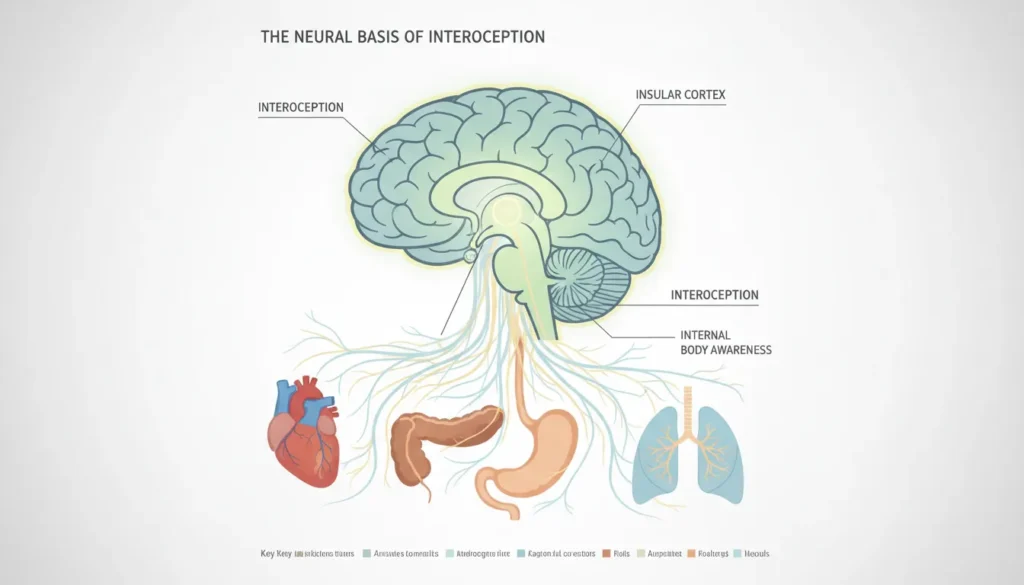
Before we explore the spiritual interpretations, it is validating to understand that your “hunch” has a biological address. Scientists call this interoception.
Interoception is your nervous system’s ability to sense and interpret signals from within—your heartbeat, your breath, and those subtle shifts in your gut. It is widely considered our “sixth sense”.
This process happens in a part of the brain called the Anterior Insular Cortex (AIC). Think of the AIC as a control room where your physical sensations meet your emotional reality. When you feel a “sign,” your brain is often comparing your current physical state against past experiences and beliefs to create a narrative.
- The Physical: A sudden flutter in the stomach.
- The Emotional: A memory of a similar moment of danger or excitement.
- The Meaning: The “sign” that tells you to pay attention.
This doesn’t make the spiritual meaning less real; it grounds it. It suggests that when you interpret body signs and meanings, your biology is actively participating in that intuition.
Beyond Superstition: Ancient Energy Frameworks
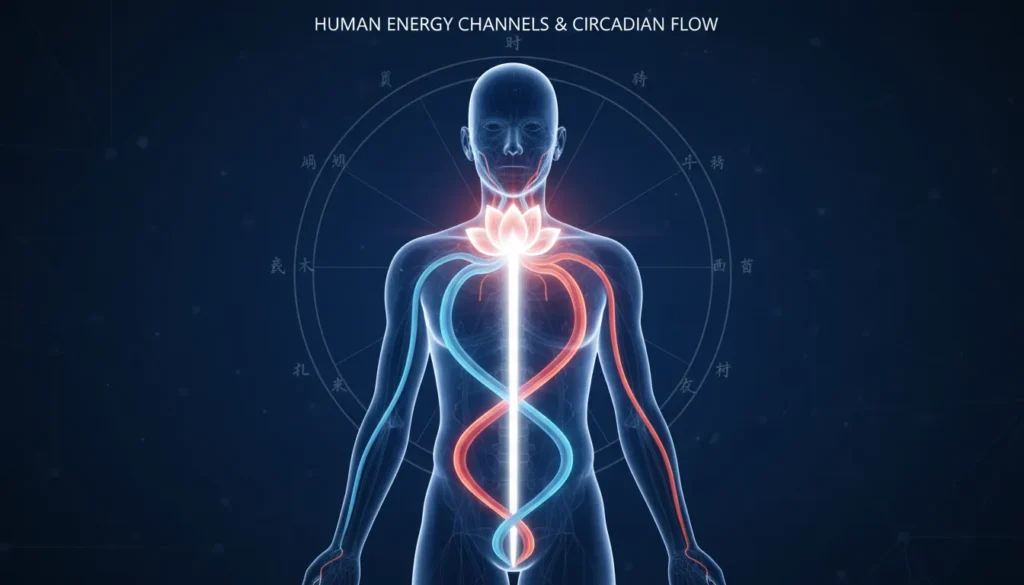
While specific sensations like ringing ears are common, looking at the systems behind these signs reveals a deeper layer of guidance. Some may even use tools like crystal resonance to decode symbols alongside these bodily feelings to gain clearer insight.
1. The Vedic Channels: Right vs. Left
In Vedic traditions, the side of the body where a sensation occurs changes its meaning entirely based on energy channels, or Nadis.
- The Right Side (Surya Nadi): Connected to the sun, logic, active consciousness, and external success. A sensation here is often interpreted as a sign of “auspicious talk” or news regarding professional recognition.
- The Left Side (Chandra Nadi): Connected to the moon, emotion, receptivity, and the subconscious. This aligns with the understanding that left-sided signals often relate to inner intuitive shifts or secrets.
2. The Throat Chakra Connection
Often, we focus on the ear or the hand, but the root energetic cause may lie elsewhere. In the Vedic view, ear sensations are frequently linked to the Vishuddha (Throat Chakra) and the “Karma Chakra”.
- The Signal: If you experience persistent sensations in the ear region, it may not just be about hearing news; it could be a nudge to examine your own speech.
- The Reflection: Are you suppressing a truth? Are you failing to speak your authentic path? The body may be using a physical marker to demand a release of that suppressed energy.
3. Chinese Chronobiology: Timing is Everything
In Traditional Chinese Medicine, a sign isn’t static; its meaning shifts based on the time of day, known as Shichen (12-hour double-periods). This approach views the body as synchronized with the flow of Qi (life force).
- Example (11:00 – 13:00): A sensation during the “Hour of the Horse” might symbolize a coming social invitation or gathering.
- Example (01:00 – 03:00): The same sensation during the “Hour of the Ox” might warn of a coming discussion or argument. This is similar to the significance of waking up at 3AM, which is often regarded as a “thin” time for spiritual communication.
This suggests that interpreting body signs and meanings requires us to look at the when as much as the what.
The Emotional Roots of Physical Signs
Sometimes, a body sign is a direct translation of an emotion we haven’t let ourselves feel. Modern psychosomatic research is beginning to map these connections with surprising precision.
The Sneezing Reflex and Decision Fatigue While many cultures view sneezing as a spiritual release or a confirmation of truth, recent studies suggest a link to cognitive depletion. When we suffer from “decision fatigue”—the exhaustion that comes after making too many choices—our nervous system becomes hyper-vigilant. A sneeze in this context might be the body’s way of “cutting back on stimulants” and signaling a desperate need for mental rest.
Skin Sensations and Boundaries That unexplainable itch or skin irritation can often mirror issues with personal boundaries. The skin is the boundary between “self” and “other”. Research into psychodermatology indicates that suppressed anger or a sense of “over-responsibility” often seeks discharge through the skin. If you are itching without a medical cause, the spiritual question might be: Where are my boundaries being crossed?.
Navigating Interpretation Safely

There is a fine line between intuition and anxiety. It is vital to approach body signs and meanings with curiosity rather than fear.
The “Nocebo Effect” is a powerful biological reality where negative expectations create actual symptoms. If you interpret every twitch as a sign of “bad luck” or a “curse,” you can inadvertently trigger a stress response that harms your health. This is essentially “self-hexing”.
A Grounded Approach to Awareness:
- Check the Biology First: Always rule out medical causes. Common issues like tinnitus or general anxiety symptoms need appropriate medical response before spiritual interpretation.
- Context Matters: Use the “Right-Left-Right” method. Start with the holistic feeling, analyze the facts, and return to an integrated understanding.
- Journal the Pattern: Instead of reacting instantly, write it down. Over time, you will see if a sensation consistently correlates with specific events or emotions in your life.
Listening to your body is an act of reclaiming your own authority. It is moving from a place of being a passive passenger to an embodied, conscious participant in your own life.