Meaning of the Parable of the Unmerciful Servant
Table of Contents
The meaning of the Parable of the Unmerciful Servant remains one of the most striking illustrations of human psychology and spiritual ethics in ancient literature.

Found in the Gospel of Matthew (18:21–35), this narrative bridges the abstract concept of divine grace with the difficult, messy reality of interpersonal relationships.
At its heart, the story addresses something most of us know well: the struggle to release a grievance when we feel genuinely wronged. Unlike simpler moral fables that suggest kindness is merely “nice,” this parable presents forgiveness as a structural necessity for a healthy inner life. Receiving mercy and extending it to others, it suggests, are not two separate acts—but a single, continuous flow.
Context of the Parable
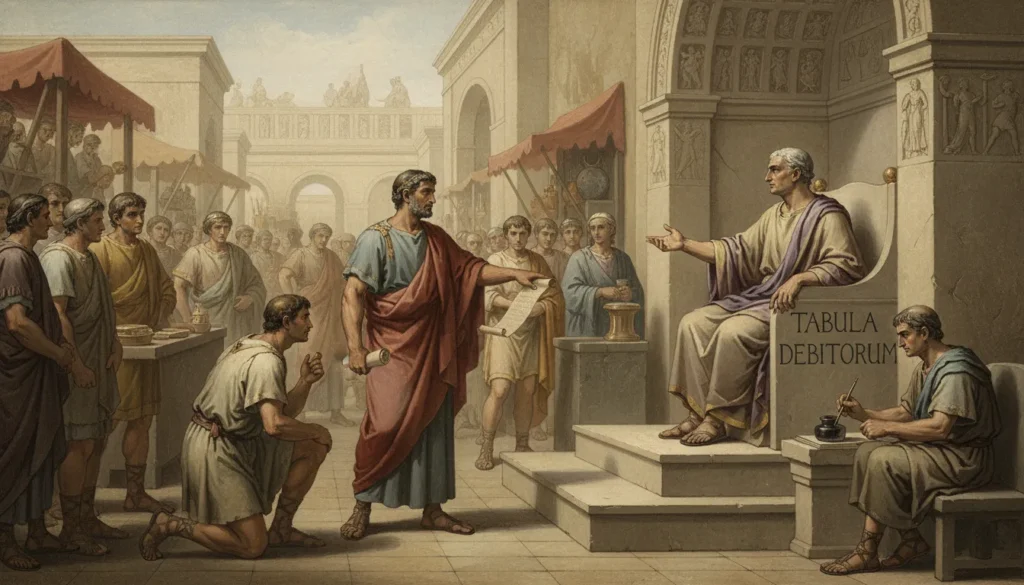
To fully grasp the parable of the unforgiving servant meaning, we need to look at the conversation that sparked it. The narrative begins with a question from the Apostle Peter: “Lord, how many times shall I forgive my brother or sister who sins against me? Up to seven times?”
In First Century Judea, rabbinic traditions often held that forgiving a repeat offender three times was sufficient. By suggesting seven, Peter probably thought he was being radically generous.
The response he received—”not seven times, but seventy-seven times” (or seventy times seven)—shifted the conversation entirely. This was no longer about a mathematical limit. It was about a state of being.
Historically, this teaching emerged in a society familiar with harsh Roman and Herodian fiscal administration. Listeners would have understood the terrifying reality of debt slavery, where creditors could liquidate entire households. By using such high-stakes financial imagery, the story moves beyond simple etiquette into life-and-death consequences.
Core Meaning Explained
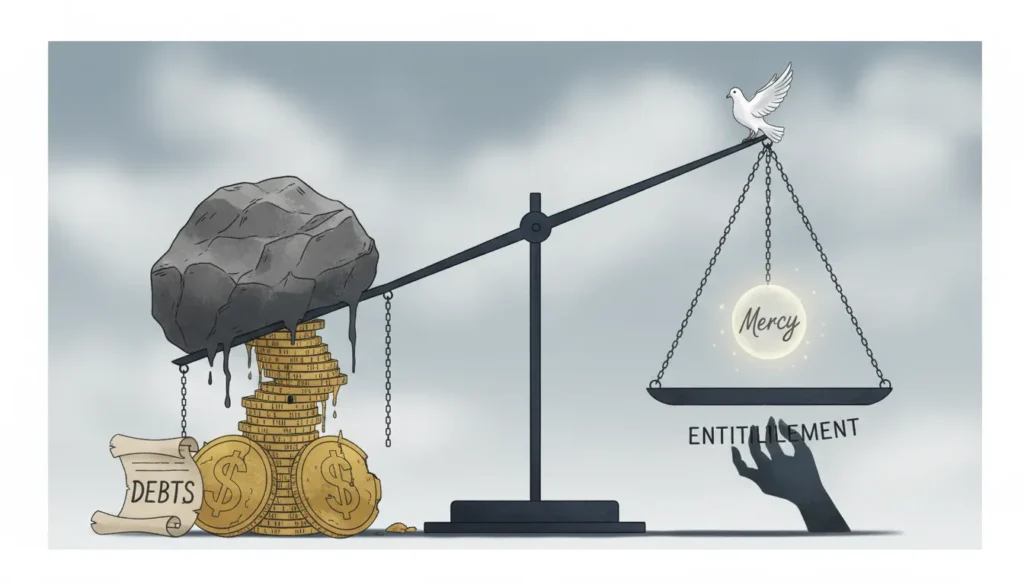
The narrative revolves around two specific debts. The stark contrast between them provides the unmerciful servant parable explanation.
Debt as a Moral Metaphor
The first character, a servant to a king, owes 10,000 talents. In the ancient world, a “talent” was the largest unit of currency, and 10,000 was the highest recognized numeral in Greek.
To put this in perspective: 10,000 talents represented roughly 60 million denarii. An amount that would take thousands of lifetimes for a laborer to repay.
This hyperbole is intentional. It symbolizes the magnitude of the human deficit before the Divine—an unpayable debt that cannot be settled through “working harder.”
The King, moved by compassion (splanchnizomai), cancels this debt entirely.
Mercy vs. Entitlement
Immediately upon being released, this same servant finds a peer who owes him 100 denarii. While this is a significant sum (about 100 days’ wages), it is finite and repayable.
The servant’s reaction—grabbing his peer by the throat—reveals the central tragedy of the story. He accepted the King’s mercy as a personal benefit but refused to adopt the King’s character.
This mirrors something we often do when encountering deeper spiritual lessons: we miss the broader message because we are too focused on our immediate, ego-driven demands. The servant failed to see that his freedom was granted so he could free others.
The Spiritual Lesson
The forgiveness in the parable of the unmerciful servant is not presented as a suggestion—it appears as a spiritual law of reciprocity. When the King learns of the servant’s harshness, the original debt is reinstated.
The lesson here is subtle but significant: grace is not a static object one possesses. It is a current one participates in.
By refusing to forgive the smaller debt, the servant stepped out of the flow of mercy and back into the world of strict accounting. The narrative suggests that one cannot exist in a state of grace with the Divine while simultaneously acting as a ruthless creditor toward peers.
Scholars often note the “sacrificial grammar” of this forgiveness. To forgive a debt means absorbing the cost oneself. The King absorbed the loss of 10,000 talents; the servant refused to absorb the loss of 100 denarii.
Modern Interpretation

In modern psychology and daily life, this parable offers a piercing insight into the nature of resentment. Today, the “debt” is rarely financial. It usually takes the form of emotional wounds, betrayal, or disrespect.
We often feel that holding onto a grudge gives us power—or at least ensures some form of justice. But the parable illustrates something uncomfortable: the one who refuses to forgive is the one who ends up in prison.
This “prison” is often a mental state of bitterness, anxiety, and isolation.
When we harbor deep resentment, physical symptoms frequently follow—tightness in the chest, elevated blood pressure, chronic fatigue. The body reflects inner states, signaling that the lack of forgiveness is taking a physiological toll.
The story warns that demanding emotional repayment from others often bankrupts our own peace of mind.
Common Misunderstandings
Because the parable ends with judgment, it is susceptible to fear-based interpretations. It helps to clarify what the story does not imply.
The “Torturers” and Divine Nature
The text says the servant was handed over to the “torturers” (Greek: basanistēs), which refers to jailers. Some view this as God actively inflicting pain.
However, many theologians and psychologists interpret this differently—as the natural consequence of an unforgiving heart. When we demand strict justice for others, we trap ourselves in a world without mercy. This, in itself, is a form of self-inflicted torment.
Forgiveness vs. Reconciliation
A crucial distinction in psychological research on forgiveness is the difference between forgiveness and reconciliation.
The parable teaches us to release the debt—the demand for payment or revenge. It does not explicitly command us to trust the offender again immediately, or to remain in abusive situations.
One can forgive a debt to free oneself from the bond, without necessarily re-entering a relationship with the debtor.
Conclusion
The meaning of the Parable of the Unmerciful Servant invites a shift in perspective. It asks us to recognize the immense “10,000 talent” grace we receive daily—from the universe, from God, or simply through the gift of existence—and to let that gratitude soften our dealings with others.
It challenges you to drop the ledger of wrongs kept against others. Not because those wrongs were trivial—but because holding onto them prevents us from truly living in freedom.